Spray Foam Roofing Insulation
Closed-cell spray foam applied directly to the underside of the roof deck creates a sealed, conditioned roof assembly that stops heat transfer, blocks condensation, and brings ductwork and equipment inside the building envelope.
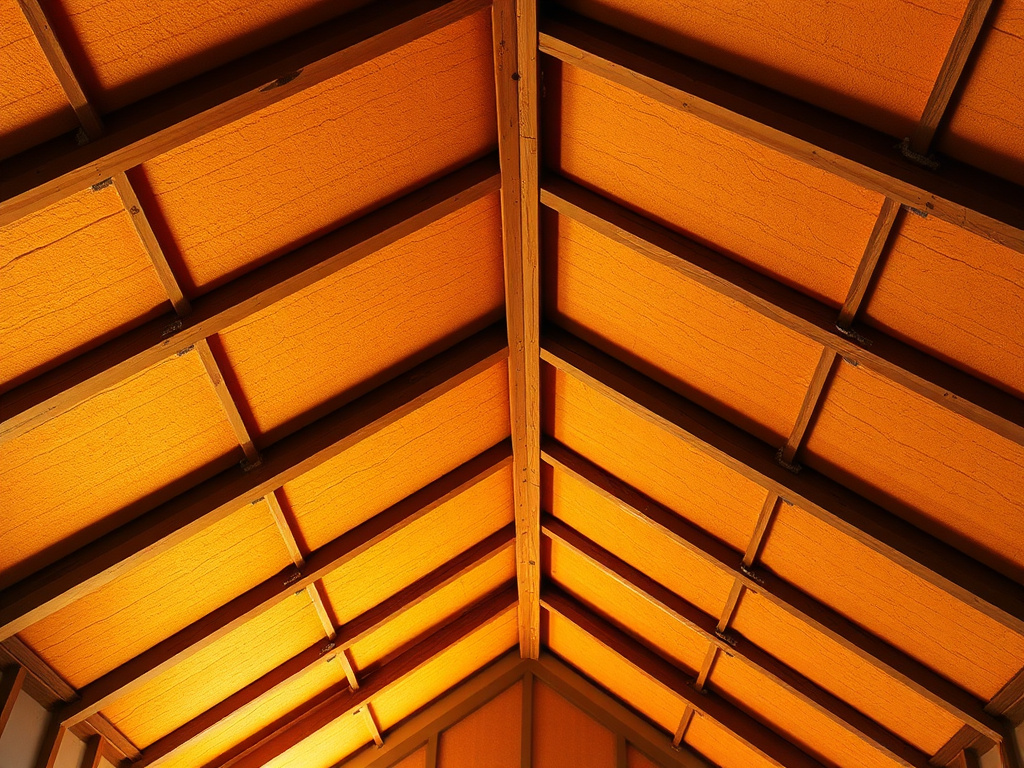
A traditional vented attic assumes the ceiling below it is the insulated line and the attic itself just floats with the outdoor temperature. That works fine when nothing important lives up there. It stops working when ductwork, an air handler, or other equipment sits in the attic, or when there's no attic floor to insulate at all because the ceiling is cathedral or vaulted. In both cases, the fix is to move the insulated line up to the roof deck itself — spraying closed-cell foam directly to the underside of the roof sheathing and rafters to create a sealed, conditioned roof assembly instead of a vented one.
Closed-cell foam is the right product for this job because it delivers the highest R-value per inch of any common insulation material, forms its own air and moisture barrier as it cures, and adds real rigidity to the roof structure. The same underside-of-the-deck technique carries over almost exactly into light-commercial buildings — workshops, small warehouses, and metal-roofed structures — where an exposed roof deck needs the same combination of insulation, air-sealing, and condensation control that a cathedral-ceiling home does.
Why homeowners choose it
- Converts a vented attic into a sealed, conditioned space that protects ductwork and equipment from temperature extremes
- Delivers a high R-value per inch, ideal where roof-cavity depth is limited
- Air-seals and insulates in a single application, closing the gaps that rigid board or batt leave at rafters and hips
- Controls condensation on the underside of metal roofing, a common cause of drip stains and rust
- Reduces attic temperature swings that shorten HVAC equipment life and drive up run time
- Adds rigidity to the roof deck and improves resistance to wind-driven moisture intrusion
Vented Attics vs. Sealed Roof Assemblies
A vented attic works by keeping the insulated line at the ceiling plane and letting outside air move freely through the attic above it. That's a reasonable, budget-friendly approach when the attic holds nothing but air. It becomes a liability when ducts and equipment sit in that space, because a vented attic swings toward whatever extreme the outdoor temperature is doing that day — and equipment built for moderate conditions ends up running inside a much harsher one.
Spraying closed-cell foam to the underside of the roof deck solves this by extending the conditioned envelope all the way to the roofline. The attic becomes part of the conditioned building rather than a buffer zone exposed to outside temperature swings, which is exactly what a cathedral ceiling needs since there's no attic floor to fall back on in the first place.
- Extends the building envelope to the roofline instead of the attic floor
- Removes the temperature swings a vented attic exposes ductwork to
- Eliminates the need for soffit and ridge ventilation in the insulated area
- Works for both new builds and retrofits on accessible roof decks
Metal Roof Retrofits and Condensation Control
Metal roofing conducts temperature changes quickly, and that speed is exactly what causes condensation to form on the underside of the panels — warm, moist interior air meets cold metal and beads up, then drips onto whatever insulation or framing sits below. Over time that cycle leads to staining, rot, and rust that's expensive to trace and fix once it's been happening quietly for a few seasons.
Spraying closed-cell foam directly to the underside of the metal panels and purlins removes the surface where that condensation forms in the first place. The foam bonds to the structure, seals seams and fastener penetrations that would otherwise leak air and moisture, and adds real R-value in the same pass — a single retrofit that solves the comfort problem and the condensation problem at once.
Cathedral Ceilings and Light-Commercial Roof Decks
Cathedral and vaulted ceilings have limited rafter depth, which leaves batt insulation with nowhere near enough room to reach a reasonable target R-value without adding rigid foam board on top and eating into headroom. Closed-cell spray foam fills the entire rafter cavity and delivers the highest R-value per inch of any common product, which often makes it the only practical way to hit a real target R-value in the space that's actually available.
The same underside-of-the-roof-deck approach carries directly into light-commercial crossover work — workshops, small warehouses, and mixed-use buildings with steel or wood roof structure. It's the same crew and the same process whether the job is a vaulted great-room ceiling in a house or the roof deck of a shop building next door.
Ideal for
- Homes with cathedral or vaulted ceilings where there's no attic floor to insulate
- Ductwork, air handlers, or mechanical equipment located in the attic or roofline
- Metal roof retrofits where condensation and radiant heat are ongoing problems
- New construction designed around a sealed, unvented roof assembly from the start
- Light-commercial buildings with exposed roof decks — workshops, small warehouses, pole barns
What affects the cost
Spray Foam Roofing questions, answered
Pricing is driven by roof square footage, pitch and access, rafter-cavity depth, and whether an ignition or thermal barrier is required for the finished space. We give a firm number after an on-site look at the roof structure — call 844-967-5247 for an estimate.
A vented attic keeps the insulated line at the ceiling and lets the attic float with outdoor temperature. A sealed roof assembly moves the insulated line to the roof deck itself, bringing the attic inside the conditioned envelope — the better choice when ducts, equipment, or a cathedral ceiling are involved.
Yes. Closed-cell foam sprayed to the underside of metal panels and purlins removes the cold surface where condensation forms, which is the root cause of the drip stains, rot, and rust that plague uninsulated metal roofs.
In most retrofits, yes — the foam is applied from the underside, to the accessible rafter cavity or roof deck, so the existing roofing generally stays in place. Roofs with damaged decking may need some repair first before we spray.
Spray Foam Roofing done right, by a licensed crew
Spray Foam Roofing isn't a commodity — the result depends entirely on how carefully it's planned and installed for your specific property. We assess what your property actually needs, prep and air-seal properly, and install to your target R-value, so the work delivers the comfort and savings it's supposed to. No shortcuts, no builder-grade rush.
Every job starts with a free, no-pressure quote — an on-site look at your property, a clear explanation of what we'd recommend and why, and an itemized number before any work begins.
Just as important, we treat your property like the system it is. Insulation, air sealing, and moisture control all interact, and getting one right while ignoring the others leaves comfort and savings on the table. When we scope your spray foam roofing, we look at how it fits the whole picture — so the finished result performs the way it should and actually lowers the bills you feel every month. That whole-property mindset, plus honest advice about what your home or building truly needs, is what our clients count on us for.
Free assessment
We evaluate your property and give you a clear, itemized quote before any work begins.
Expert install
We prep, air seal, and install your spray foam roofing to spec — clean and on schedule.
Savings you can feel
A more comfortable property and lower energy bills, backed by a licensed & bonded crew.
Related services
Ready for a free spray foam roofing quote?
Tell us about your home and we'll put together a clear, no-pressure quote — with the right insulation for your budget and your goals.