Closed-Cell Spray Foam Insulation
A dense, rigid foam that delivers the highest R-value per inch of any common insulation material and doubles as a moisture barrier — the right choice anywhere space is tight or water exposure is a real risk.
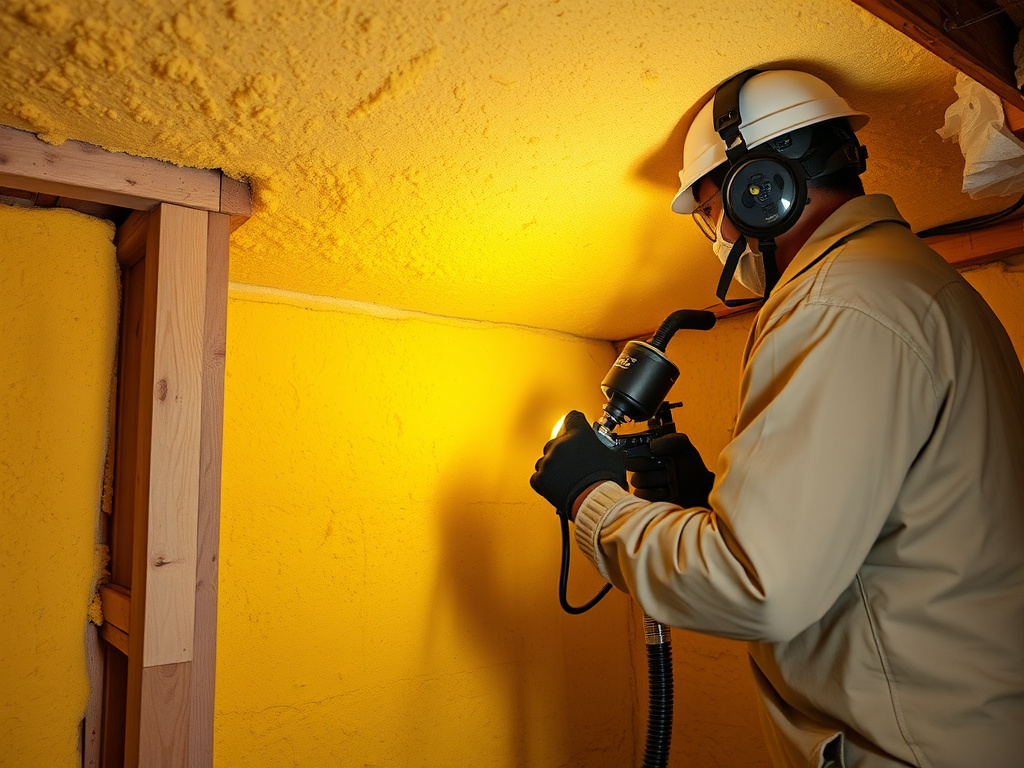
Closed-cell spray foam cures into a rigid, dense material with tightly packed, sealed cells that trap gas rather than air — which is exactly what gives it a higher R-value per inch than any other common insulation product, typically in the R-6 to R-7 range. That density also makes it structurally rigid once cured, adding real racking strength to stud walls and rafters, and effectively moisture-resistant, since the sealed cell structure doesn't wick or absorb water the way an open-cell foam or fiberglass product can.
Those three properties — high R-value in a thin layer, added structural rigidity, and genuine moisture resistance — make closed-cell foam the right tool for crawl spaces, rim joists, roof decks, and exterior walls where cavity depth is limited or water exposure is a real possibility. It costs more per board foot than open-cell foam, but for the applications where it's actually needed, there isn't a substitute that performs the same job. Call 844-967-5247 for a free estimate and we'll confirm where closed-cell foam is worth the premium on your project and where it isn't.
Why homeowners choose it
- Highest R-value per inch of any common insulation material (typically R-6 to R-7)
- Genuinely moisture-resistant — the sealed cell structure doesn't absorb or wick water
- Adds real structural rigidity and racking strength to stud walls and rafters
- Performs in shallow cavities where every fraction of an inch of R-value matters
- Doubles as an air barrier and vapor retarder in a single application
- Resists the sagging, settling, and moisture-driven degradation that loose-fill products can suffer over time
Why Closed-Cell Delivers More R-Value in Less Space
Every material insulates by trapping gas in tiny pockets that resist heat transfer — the difference with closed-cell foam is what's trapped and how tightly. Its cells are fully sealed and packed with a low-conductivity gas rather than ordinary air, which is why it reaches roughly double the R-value per inch of open-cell foam and several times that of standard fiberglass batt. In a 2-inch rim joist cavity or a shallow roof deck where there simply isn't room for six inches of loose-fill material, that density is what makes hitting a real target R-value possible at all.
That efficiency comes at a cost — closed-cell foam runs more per board foot than open-cell or blown-in products — but in the applications where cavity depth is the limiting factor, there's no substitute that gets you the same performance in the same space. We'll measure the actual cavity you're working with and tell you honestly whether closed-cell is worth the premium for your project or whether a less expensive product will do the job just as well.
- Typical R-value: R-6 to R-7 per inch, roughly double open-cell foam
- Sealed cell structure traps low-conductivity gas rather than ordinary air
- Delivers meaningful R-value even in shallow, 2-3 inch cavities
- Higher material cost per board foot than open-cell or blown-in products
Moisture Control and Structural Strength
Because closed-cell foam's cells are fully sealed, the cured material doesn't absorb or wick water the way fiberglass batts or open-cell foam can — it acts as an effective moisture and vapor barrier in a single application, which is exactly what a crawl space, rim joist, or exterior wall in a humid or flood-prone region needs. Standing water or high humidity that would ruin a batt's R-value and invite mold growth simply doesn't penetrate a properly cured closed-cell layer the same way.
The foam's rigidity is a second, often-overlooked benefit — once cured, it bonds to framing and adds real shear strength, which is one reason it shows up so often in metal building and pole barn projects where the insulation is doing double duty as both a thermal layer and a structural stiffener against wind load. For a homeowner, that same rigidity means the foam won't sag, settle, or compress over the life of the building the way some loose-fill materials eventually do.
- Sealed cell structure resists water absorption and wicking
- Functions as an air barrier and vapor retarder in one application
- Adds shear strength and racking resistance to framed walls and rafters
- Doesn't sag, settle, or compress with age the way loose-fill insulation can
Common Applications: Crawl Spaces, Rim Joists, Roof Decks, and Metal Buildings
Crawl spaces and rim joists are two of the most common places we install closed-cell foam, since both sit close to ground moisture and both benefit enormously from a rigid, moisture-resistant layer that also seals air leaks at the same time — the rim joist in particular is one of the leakiest, least-insulated areas in a typical home. Roof decks and cathedral ceilings are another strong fit, especially where there's no attic space to work with and every inch of depth needs to earn its keep.
On the light-commercial side, metal buildings, pole barns, and workshops are a natural match for closed-cell foam, since the same application handles insulation, air-sealing, and structural stiffening in one pass — see our commercial insulation service for more on that side of the business. Whatever the application, we scope the job to the actual cavity and moisture exposure you're dealing with rather than defaulting to the most expensive product on every job.
- Crawl space walls and rim joists exposed to ground moisture
- Roof decks and cathedral ceilings with limited depth
- Exterior walls in humid or flood-prone regions
- Metal buildings, pole barns, and light-commercial structures
Ideal for
- Crawl spaces and rim joists exposed to ground moisture and humidity
- Roof decks and cathedral ceilings needing maximum R-value in a limited depth
- Exterior walls and rim joists in flood-prone or consistently humid regions
- Metal buildings, pole barns, and light-commercial structures needing both insulation and structural stiffening
- Retrofit projects where cavity space is too tight for open-cell foam to hit target R-value
What affects the cost
Closed-Cell Spray Foam questions, answered
Closed-cell foam typically costs more per board foot than open-cell, since it's denser and delivers roughly double the R-value per inch. The right choice depends on the application — we quote both so you can compare directly for your project. Call 844-967-5247 for a free estimate.
It's highly moisture-resistant rather than fully waterproof — the sealed cell structure doesn't absorb or wick water the way fiberglass or open-cell foam can, which is why it's the standard choice for crawl spaces, rim joists, and other moisture-prone areas.
Closed-cell foam on the crawl space walls and rim joists handles insulation and moisture resistance on its own, but pairing it with a ground vapor barrier and sealed vents (full encapsulation) gives the most complete, long-term moisture control. We can quote either scope depending on your crawl space's condition.
Yes. Properly installed closed-cell foam cures within hours and is inert once fully set. We follow manufacturer re-occupancy guidelines and ventilate the work area during installation on every job.
Closed-Cell Spray Foam done right, by a licensed crew
Closed-Cell Spray Foam isn't a commodity — the result depends entirely on how carefully it's planned and installed for your specific property. We assess what your property actually needs, prep and air-seal properly, and install to your target R-value, so the work delivers the comfort and savings it's supposed to. No shortcuts, no builder-grade rush.
Every job starts with a free, no-pressure quote — an on-site look at your property, a clear explanation of what we'd recommend and why, and an itemized number before any work begins.
Just as important, we treat your property like the system it is. Insulation, air sealing, and moisture control all interact, and getting one right while ignoring the others leaves comfort and savings on the table. When we scope your closed-cell spray foam, we look at how it fits the whole picture — so the finished result performs the way it should and actually lowers the bills you feel every month. That whole-property mindset, plus honest advice about what your home or building truly needs, is what our clients count on us for.
Free assessment
We evaluate your property and give you a clear, itemized quote before any work begins.
Expert install
We prep, air seal, and install your closed-cell spray foam to spec — clean and on schedule.
Savings you can feel
A more comfortable property and lower energy bills, backed by a licensed & bonded crew.
Related services
Ready for a free closed-cell spray foam quote?
Tell us about your home and we'll put together a clear, no-pressure quote — with the right insulation for your budget and your goals.